


 I was diagnosed with rheumatoid arthritis back in 2008, and I had no idea what autoimmune diseases were. I remember my doctor telling me that I would be okay as long as I kept my disease under control, but didn’t tell me much more than that. For years I just accepted what I had and I never bothered to understand what exactly was happening in my body. However, now I wish someone would have told me what autoimmune diseases are and what you can do to help them. So if you have just gotten an autoimmune disease diagnosis, or have had one for a while and never understood it, keep reading to learn more about them.
What are Autoimmune Diseases?
Autoimmune disease occurs when your immune system attacks healthy cells, tissues and/or organs in your body.
Under normal conditions, your immune system only attacks “invaders” such as bacteria, viruses, infections, etc. Your immune system can usually tell the difference between your self and non-self. However, with autoimmune diseases, certain cells called autoreactive immune T cells are activated. These cells are normally either killed or regulated by the central and peripheral immune tolerance systems. But in some cases, these autoreactive T cells activate, causing a cascade of immune responses that end up destroying the body’s own tissues and cells. In response, the body makes self-antigens against these cells and thus continues to attack the body’s healthy tissue, triggering an autoimmune response.
Key Immune Cells
Let’s break this down further. What is really going on with your immune system that it decides to mount an attack on your body?
Autoimmune and the dysregulation of the immune system happens in the adaptive immunity part of your immune system. Adaptive is your acquired immunity. Your immune system has two key types of cells – T lymphocytes and B lymphocytes, also known as T cells and B cells. T cells secrete cytokines to trigger immune response and they also are your regulatory cells or micromanagers of your immune system. They differentiate into more specific types but that’s more detail than we need right now. B cells are the cells that make more specific antibodies.
Your Immune System
Now let’s talk about the immune system. Your lymphocytes are created in your bone marrow and thymus and create what is called central tolerance. This helps shape your immune system and keeps it balanced. Then you have something called peripheral tolerance, that is like your body’s policing system. Any T cells that your body creates that happen to be self-reactive are destroyed. B cells also help regulate this peripheral tolerance. However, there are some T and B cells that are auto-reactive, or self-reactive, that can leak out into circulation. In fact, everyone has auto reactive T and B cells floating around.
But here’s the difference. People can have physiological autoimmunity where you have these auto-reactive T and B cells that cause no damage. Or you can have pathological autoimmunity, that is triggered by genetics and/or environmental factors where your immune system becomes dysregulated. That is where you see tissue or organ damage, or an active autoimmune disease. This active autoimmune disease happens when either the T cells are over-reactive or the T regulatory cells are not active enough. You can also have autoantibody production where your body starts making antibodies against its own tissues and that produces an attack on a cell or protein in your own body.
Types of Autoimmune Diseases
The medical world likes to categorize autoimmune diseases into two different types: organ-specific and non-organ specific. Some diseases fit neatly into these categories, while others fall somewhere in the middle.
Organ autoimmune disease is where one organ is attacked. This includes conditions like Hashimoto’s or graves (thyroid), Addisons (adrenal), type 1 diabetes (pancreas) and celiac (small intestine).
Non-organ is where the immune system attacks are more widespread, such as rheumatoid arthritis, lupus, and multiple sclerosis.
What Causes Autoimmune Diseases?
Why some people have autoreactive T and B cells is not clear. Many people may have a genetic predisposition to them and never develop them. Others find that they develop these self-attacking conditions after being sick with a virus or bacteria. Many of my own clients noticed that these conditions followed a major life stressor like a death of a loved one, or divorce. It is believed that somehow these triggers provoke these autoreactive cells to activate.
What Fixes Autoimmune Diseases?
While there are no cures for these conditions, many people find relief from the symptoms and progression of these diseases using medication and/or lifestyle and diet changes. Treatment can be incredibly frustrating, and it is important to stay patient and give a number of different options a try.
If you need help with your autoimmune disease, please contact me. There’s nothing I love more than helping people feel better. Also follow me on my socials (Instagram, Facebook and YouTube). There you will find tips on how to use diet and lifestyle to control your autoimmune disease symptoms.
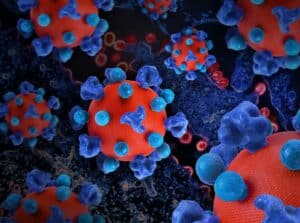
Photo by National Institute of Allergy and Infectious Diseases on Unsplash